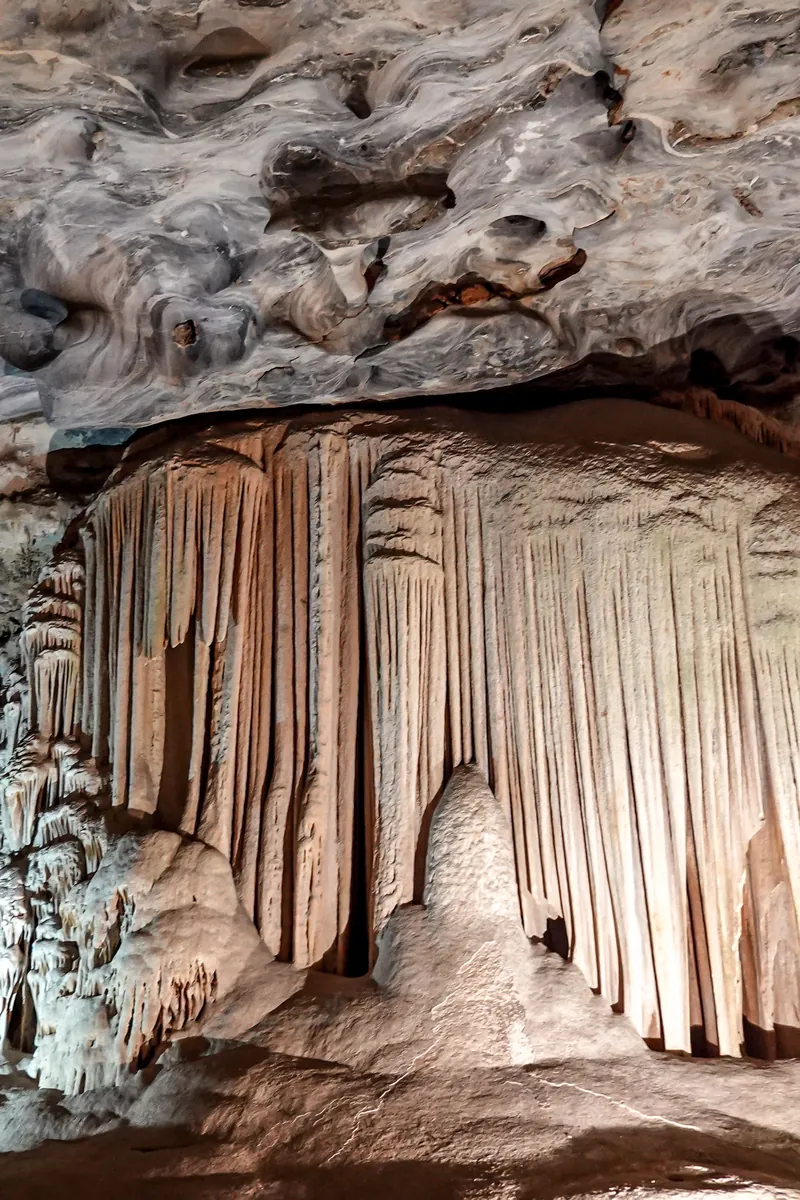
Sterkfontein Caves sits about 40 km northwest of Johannesburg, near Krugersdorp in South Africa's Gauteng province, at the heart of the Cradle of Humankind — inscribed by UNESCO in 1999 as part of the Fossil Hominid Sites of South Africa. Excavations here since the 1930s have made it the single richest early-hominin fossil site on the planet, yielding more than 700 hominin fossil specimens — more early-hominin material than any other single site.
Two discoveries define Sterkfontein's fame. In 1947, palaeontologist Robert Broom and his assistant John T. Robinson uncovered "Mrs Ples" (specimen Sts 5), a remarkably complete Australopithecus africanus skull that became one of the most famous fossil finds in Africa. Decades later, Ronald Clarke identified the first bones of "Little Foot" in 1994 and located the skeleton in situ in the cave in 1997; freeing it from the surrounding rock took roughly another twenty years, and the reconstructed skeleton — designated StW 573 and dated to around 3.67 million years old — was unveiled at Wits in December 2017. It is the most complete Australopithecus skeleton ever found. Both fossils were found within the same cave system visitors walk through today.
Sterkfontein reopened to the public on 15 April 2025 after a two-year closure following flood damage in 2022, now under full management by the University of the Witwatersrand. A visit combines a guided walk through the dolomite caverns where these fossils were found, a museum and Timeline Walk tracing human origins, and the working fossil preparation laboratory where new discoveries are still being cleaned and studied. We handle the ticketing so your guided tour hour is confirmed before you arrive — one less thing to plan on your Cradle of Humankind day out.